Reflect
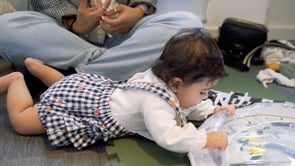
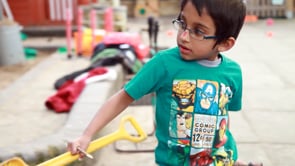
- What did you notice about the children’s interactions? How did they communicate their ideas and decisions? What non-verbal cues showed their engagement or interest?
- How were the children learning during this activity? Which areas of development (physical, cognitive, social, language) were evident? What characteristics of effective learning did you observe (e.g., curiosity, persistence, collaboration)?
- How did the adult support the learning process? What strategies were used to scaffold thinking and problem-solving? How did the adult respond to mistakes or challenges?
- In what ways did the environment contribute to the experience? How did the setting and available space influence the children’s choices and actions?
- What was valuable about the materials provided? How did the resources encourage exploration, creativity, or teamwork? Were there opportunities for open-ended learning?
- What surprised you or stood out most in the children’s approach? Did they show any unexpected skills or ideas?
What Next – Planning
How can you use what you’ve learned from this activity in your own practice? What opportunities can you create to build on children’s interests and extend their learning?
- Extend the Dough-Making Experience.
Provide opportunities for children to explore different recipes (e.g., adding herbs, making flatbreads). Introduce measuring tools (cups, scales) to develop mathematical concepts like quantity and comparison.
- Build on Language and Communication.
Encourage children to describe textures, changes, and processes during cooking. Introduce new vocabulary (e.g., knead, sticky, smooth) through conversation and questioning.
- Strengthen Problem-Solving and Collaboration.
Offer challenges such as “How can we make the dough less sticky?” or “What happens if we add too much water?” Support turn-taking and negotiation by giving shared tasks (e.g., one pours, one stirs).
- Connect to Other Areas of Learning.
Link to science by exploring changes in materials (solid to sticky dough). Incorporate literacy by creating a simple recipe card together.
- Enhance the Environment.
Set up a dedicated “cooking station” with accessible bowls, spoons, flour, and water. Include visual prompts (pictures of steps) to support independence.
- Reflect and Document.
Take photos or notes of children’s ideas and problem-solving strategies. Use these observations to plan future activities that build on their interests.