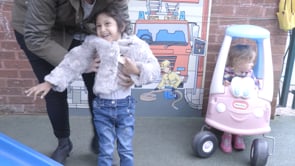
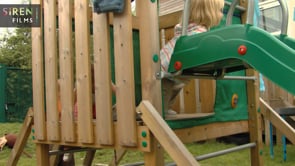
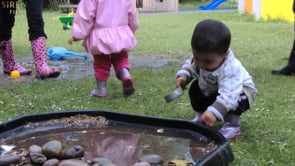
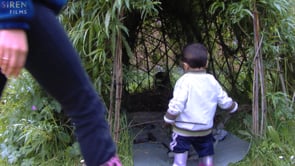
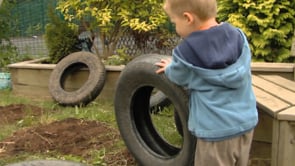
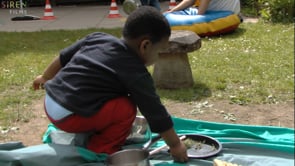
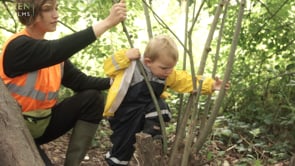
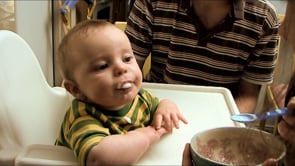
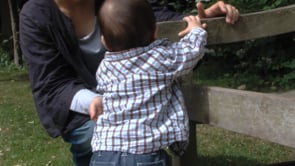
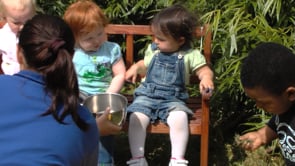
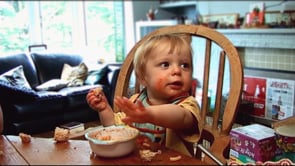
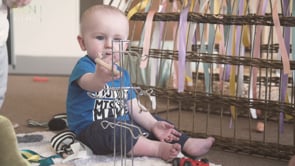
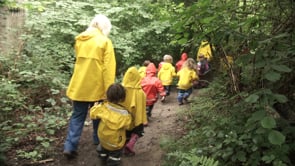
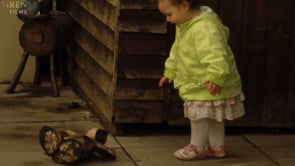
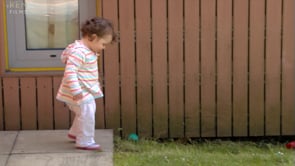
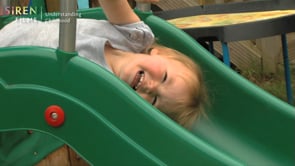
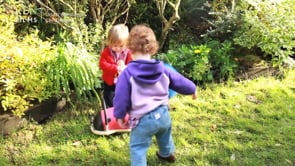
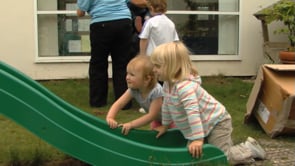
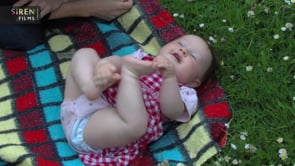
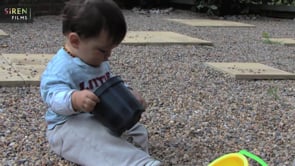
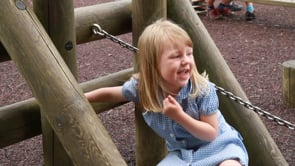
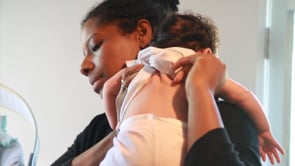
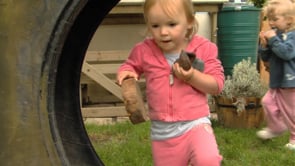
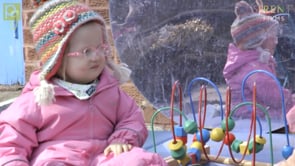
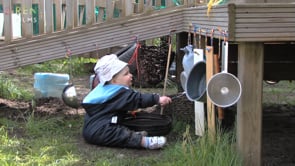
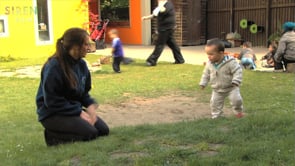
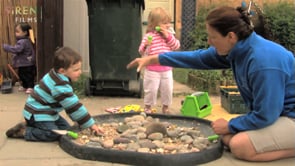
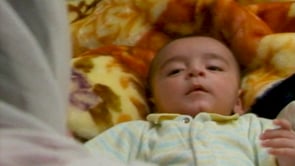
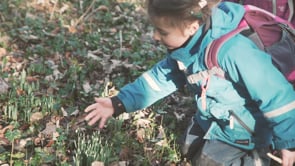
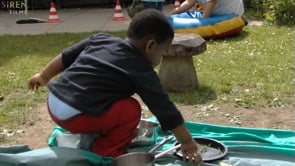
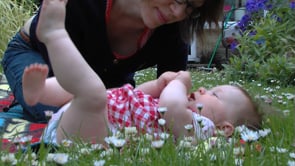
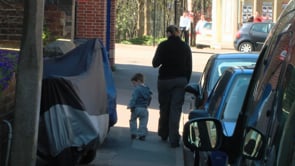
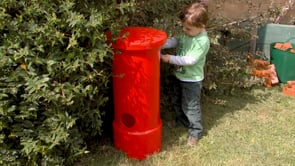
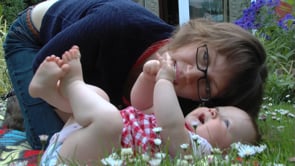
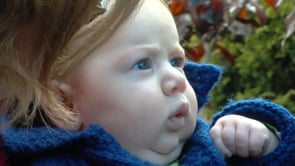
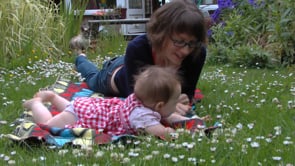
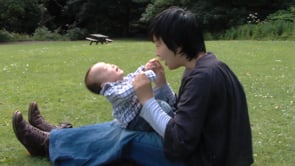
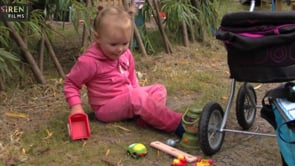
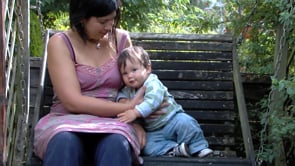
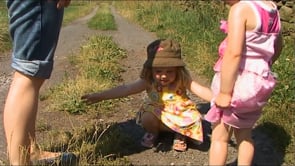
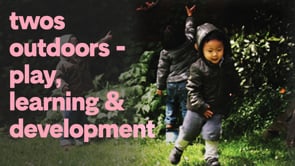
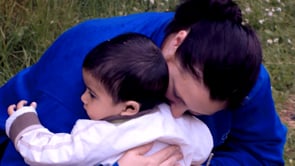
Even though Bobby is outside for only a short time, once we appreciate how much stimulation she is getting in this rich and complex environment (all the other senses are working just as hard at the same time), we can understand that several short periods outdoors may match the attention span of a child at this age more than a few, longer ones. Bobby may well need to sleep for a while now so that her brain can process everything that has just happened [Karmiloff-Smith, 2010 – see also the notes on Miles].
Vision is extremely important to humans, and in order to construct the highly complex sensory system that it is, they need to spend plenty of time receiving a very wide range of visual stimuli, such as bright and dark, colour and tones, edges and contrast, near and far, motion and stillness [Gibson, 1986]. Taking babies outdoors increases all aspects of visual development, especially the ability to see things at a distance and to perceive motion.
It takes several years to achieve full adult vision, so continual visual stimulation is very important in the early years [Day, 2009], and babies need to experience real objects in natural light [Martin & Berke, 2007]. Evidence is currently building from medical research that outdoor light and a strongly 3D visual landscape affects the way the eyeball grows, reducing the development of short-sightedness [e.g. Rose et al., 2008].
As well as learning to see individual objects, their texture, shape, colour, size and so on (the task of light sensitive cells in the retina called cones that are wiring up a stream to the brain that determines ‘what is it?’), an entirely different stream in the visual system concentrates on location, directing and speed, asking ‘where is it, where is it going and how fast is it moving?’ [Sax, 2005: 22]. This task begins with cells arranged around the outside of the retina called rods. We tend to pay attention to the objects that are in the centre of our field of view, but actually our ‘peripheral vision’ is equally important to us, especially for keeping us safe from unexpected harm.
Our increasingly indoor, sedentary and screen-oriented lifestyles are leading to poor peripheral vision in today’s children [Forencich, 2006]. Bobby’s many opportunities at the park to take in a wide landscape, pay so much attention to movement of so many kinds, and link what she sees with what she simultaneously hears and feels, is exactly what she needs during this year to develop the full suite of vision capacities she needs for learning and life.